
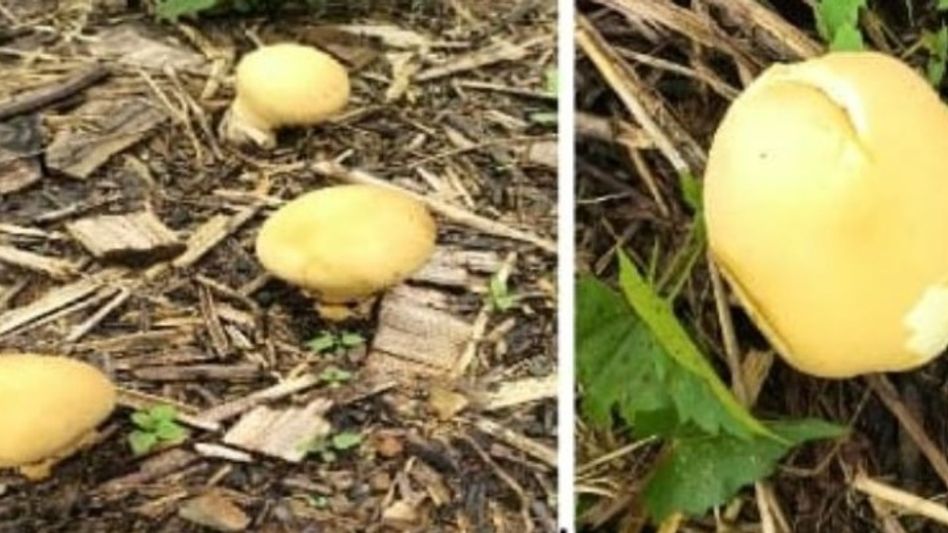
Researchers have documented a striking yellow puffball mushroom in Arunachal Pradesh, sparking interest in the state’s fungal biodiversity. The find occurred in Longding district and may represent a notable addition to regional records.
At a glance
- Field survey in Zedua village on June 4 documented the specimen.
- Preliminary identification points to Bovista colorata, known as the yellow puffball mushroom.
- Observation credited to Dr. Deep Narayan Mishra of ICAR Krishi Vigyan Kendra Longding.
- Further laboratory analysis required for full confirmation.
- Discovery underscores the understudied fungal wealth of the Eastern Himalayas.
The recent sighting of a yellow puffball mushroom in Arunachal Pradesh adds a fresh chapter to efforts exploring the state’s ecological richness. Teams from the ICAR Krishi Vigyan Kendra conducted routine fieldwork when they encountered the unusual specimen. This event draws attention to fungi that often go unnoticed despite their role in forest ecosystems.
Timeline of the Discovery
On June 4, 2026, researchers carried out a field survey in Zedua village, Longding district. During this activity, Dr. Deep Narayan Mishra spotted the bright yellow fruiting body. The team quickly documented its features for further study. By June 7, details of the observation reached wider audiences through official channels.
The timing aligns with ongoing efforts by agricultural and biodiversity teams to catalog local resources. Such surveys help build baseline data for remote areas that receive less scientific attention than more accessible regions.
Identification Process and Scientific Details
Scientists noted the mushroom’s distinctive spherical shape and vivid yellow color. These traits led to a preliminary classification as Bovista colorata. Experts emphasize that visible characteristics alone are not conclusive. Detailed microscopic examination and molecular analysis will be necessary to confirm the species identity.
Dr. Deep Narayan Mishra, serving as Subject Matter Specialist in Plant Pathology at KVK Longding, led the observation. His role focuses on plant health and related biodiversity, making him well-positioned to recognize unusual fungal finds during field exercises.
Context (general): Puffball mushrooms belong to a group of fungi that release spores from mature fruiting bodies. Many species in this family thrive in forested or grassy areas with specific soil and moisture conditions. The Eastern Himalayas host high ecological diversity, though comprehensive fungal inventories remain limited in several districts.
Significance for Regional Biodiversity
The potential first record of this yellow puffball mushroom in Arunachal Pradesh highlights gaps in current knowledge. The Eastern Himalayan region is known for rich biological variety, yet many fungal species await proper documentation. This discovery contributes to broader efforts aimed at understanding ecosystem dynamics and supporting conservation priorities.
Such findings also demonstrate the value of localized surveys conducted by institutions like ICAR Krishi Vigyan Kendra. These centers bridge agricultural extension work with scientific exploration, often uncovering surprises in remote villages.
Key Facts Summary
| Item | Details |
|---|---|
| Date | June 4, 2026 (survey); June 7, 2026 (report) |
| Duration | Single observation during routine fieldwork |
| Location | Zedua village, Longding district, Arunachal Pradesh |
| Organizer | ICAR Krishi Vigyan Kendra (KVK) Longding |
| Main issue raised | Documentation of rare fungal specimen |
| Official response | Preliminary identification; calls for lab confirmation |
| Reported impact | Increased attention on understudied fungal diversity |
What Residents and Local Teams Should Expect Next
- Continued monitoring of similar habitats during regular agricultural surveys.
- Possible follow-up visits to Zedua village for additional samples.
- Laboratory testing at specialized facilities to verify species identity.
- Sharing of confirmed findings through scientific channels and local extension programs.
- The source did not specify exact timelines for laboratory results or expanded surveys.
Because the discovery is recent, authorities have not outlined large-scale public programs. Local communities can support such efforts by reporting unusual fungi to KVK teams.
Why This Matters for Arunachal Pradesh
Fungi play essential roles in nutrient cycling and forest health. Documenting species like the yellow puffball mushroom helps create a clearer picture of ecological connections across districts. In a region celebrated for its biodiversity, each verified record strengthens the foundation for informed conservation and sustainable land use.
The find also encourages greater investment in mycological research. With many areas still underexplored, consistent fieldwork can reveal patterns that benefit both science and local livelihoods tied to natural resources.
In summary, the documentation of a yellow puffball mushroom in Arunachal Pradesh represents a small but meaningful step in uncovering the state’s hidden biological treasures. While confirmation through advanced methods is pending, the sighting already spotlights the potential that lies within Longding district and similar landscapes. Ongoing collaboration between field teams and research institutions will determine the full value of this encounter for regional knowledge.
FAQ
What is the yellow puffball mushroom found in Arunachal Pradesh? It is a bright yellow, spherical fungus preliminarily identified as Bovista colorata during a survey in Longding district.
When and where was the mushroom discovered? Researchers documented it on June 4, 2026, in Zedua village, Longding district, Arunachal Pradesh.
Who made the observation? Dr. Deep Narayan Mishra, Subject Matter Specialist (Plant Pathology) at ICAR Krishi Vigyan Kendra Longding.
Is this the first record in the region? The source indicates it may represent the first recorded occurrence of the species in Arunachal Pradesh, pending full confirmation.
What steps follow the initial discovery? Detailed microscopic examination and molecular analysis are required to confirm the taxonomic identity.
Why does this discovery matter? It highlights the understudied fungal diversity of the Eastern Himalayas and supports broader biodiversity research in the state.
How can people learn more about local fungi? Contact ICAR Krishi Vigyan Kendra offices or participate in community awareness programs organized by agricultural extension teams.
Hashtags:- #YellowPuffballMushroom #ArunachalBiodiversity #LongdingDiscovery #BovistaColorata #EasternHimalayas #RareMushroom #ICARKVK #FungalDiversity #ArunachalPradesh #ZeduaVillage #MushroomSurvey #HimalayanFungi #BiodiversityIndia #NatureDiscovery #KVKLongding