
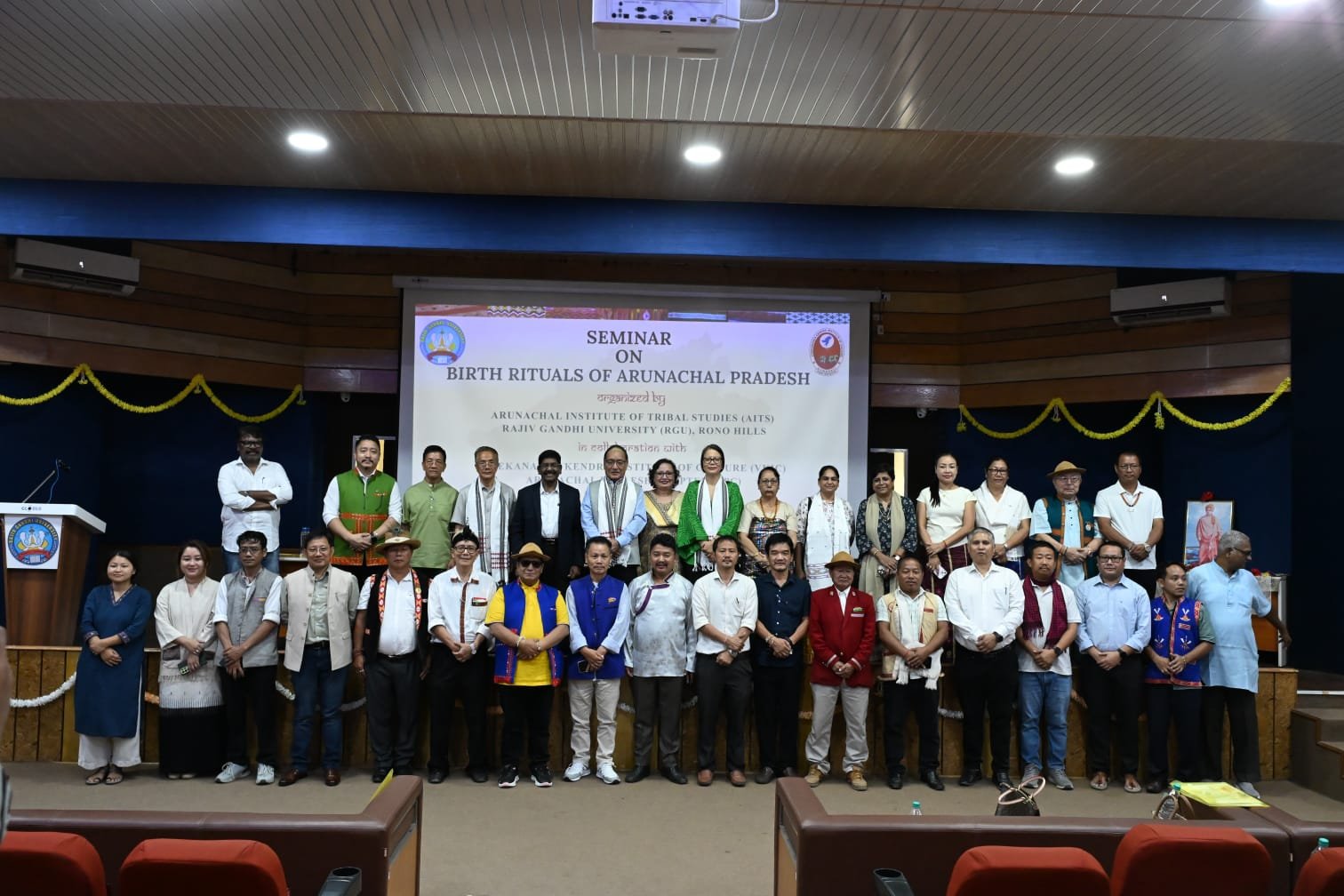
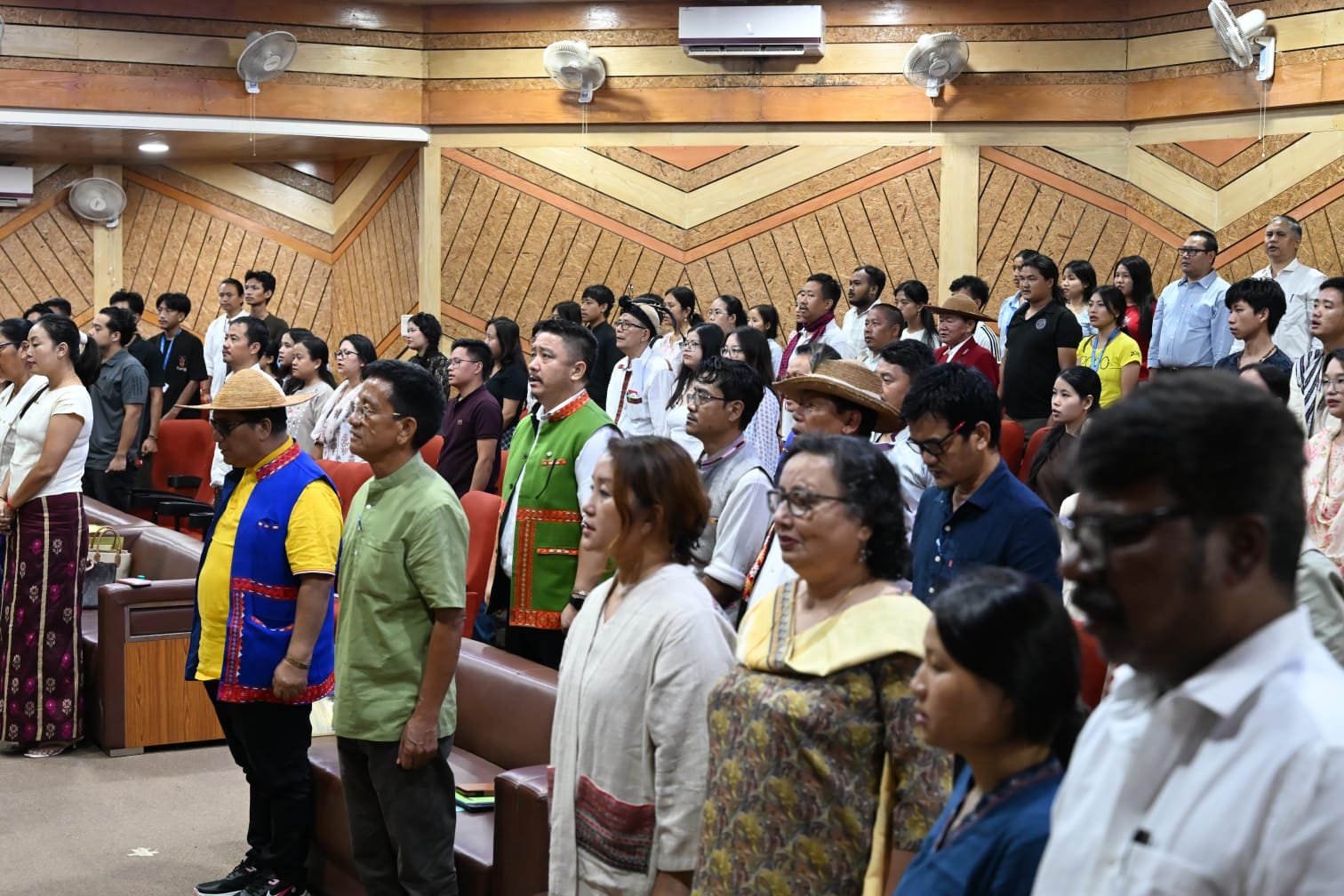
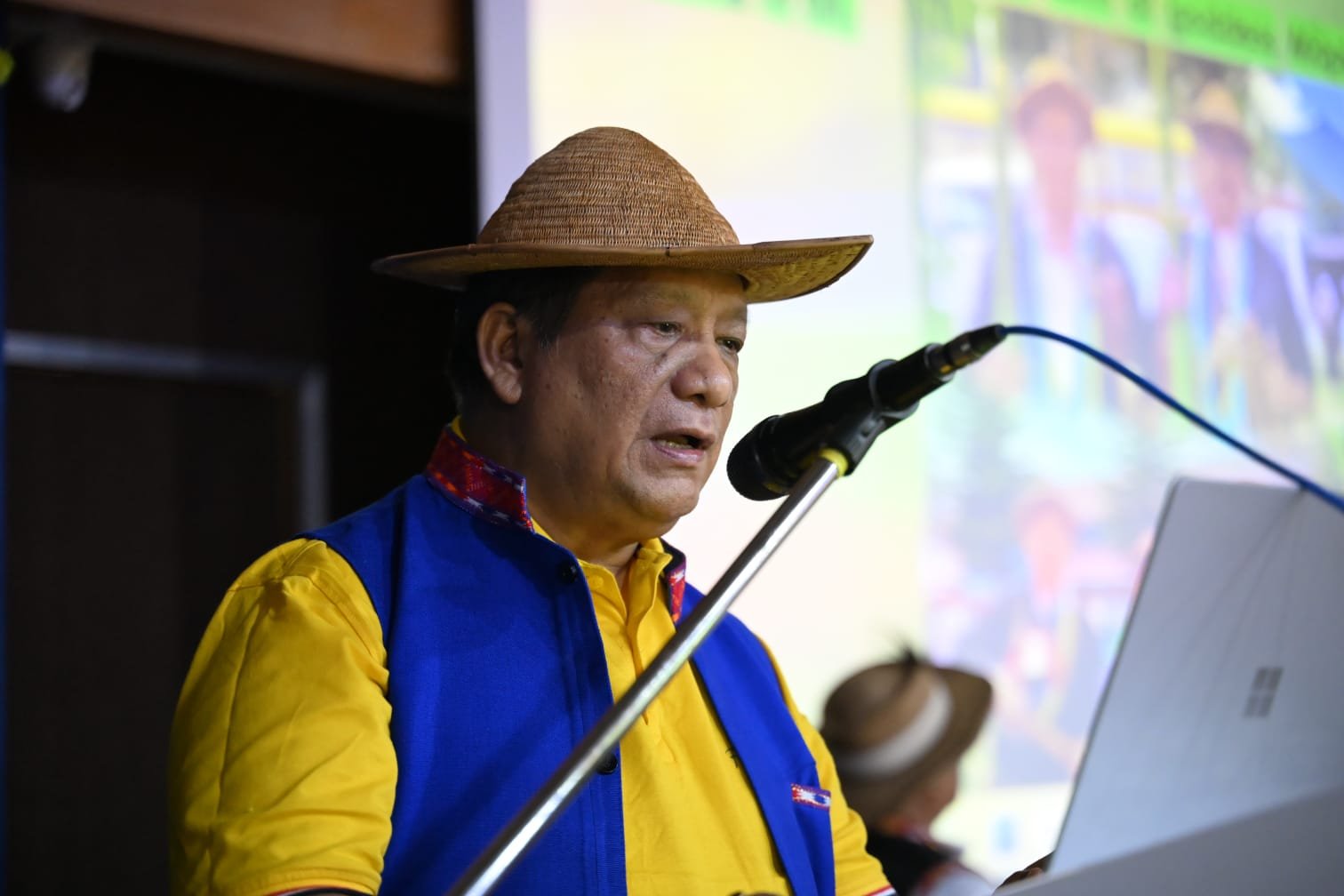
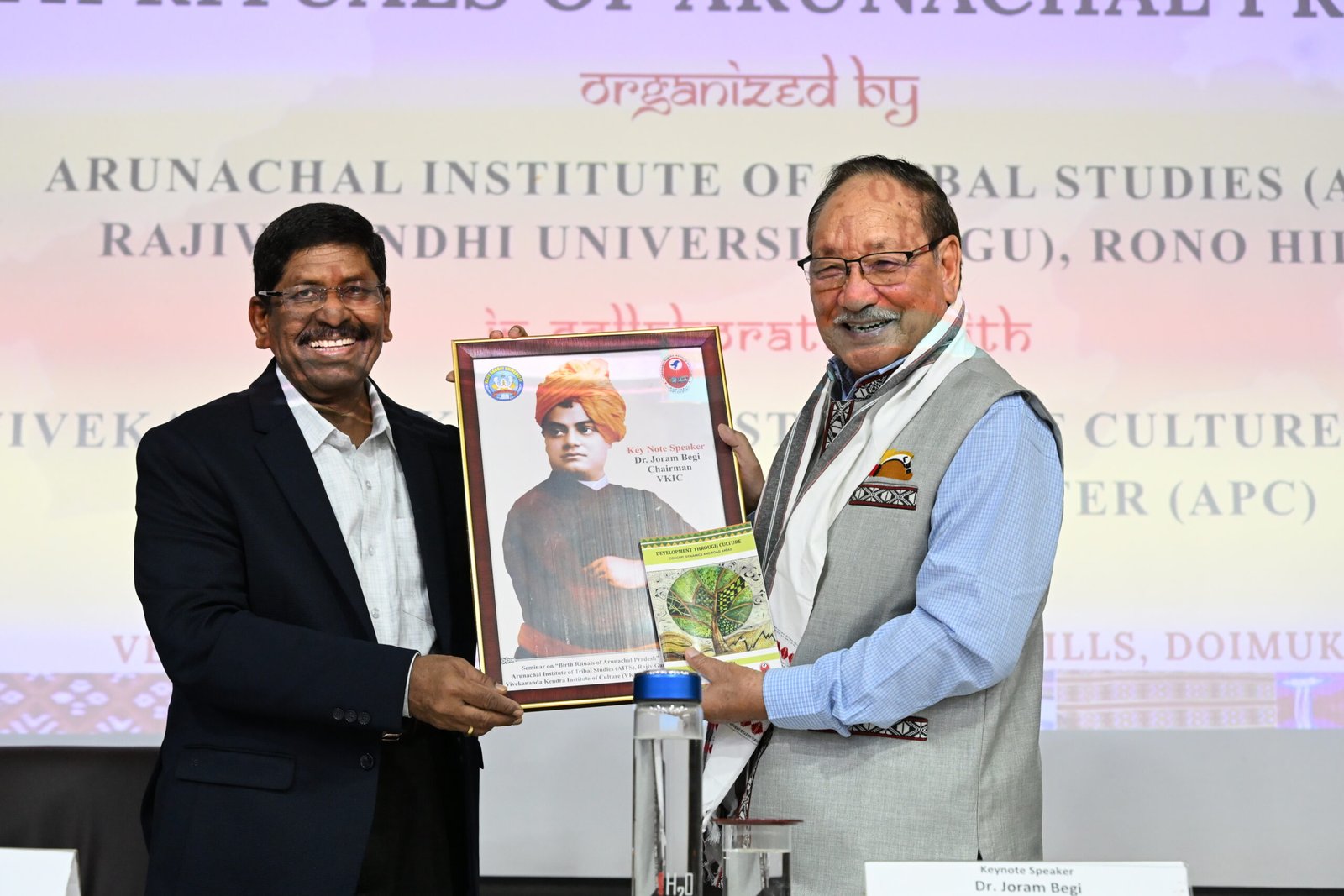
The Arunachal Institute of Tribal Studies (AITS) of Rajiv Gandhi University, Rono Hills Doimukh Arunachal Pradesh had organised an one day seminar in collaboration with the VKIC (Vivekananda Kendra Institute of Culture on 28th September 2026, at University Campus and the seminar was inaugurated by his honour the Vice Chancellor of R G Univerity Prof. Shivraj, Keynote addressed by Dr. Joram Begi the PrantSanchalak and Chairman of VKIC, in presence of special Guest Sh. Hage Kojin, rtdCommissioer, Dr. Emi Rumi President IFCSAP and many others. Prof. Jumyir Basar AITS RGU and Prof Nani bhat RG University chaired the sessions to moderate the deliberations
There were 17 Resource persons that took part for different communities of the state. The Paper presenters were as follows:-
- GetomBorang CE (PWD)on Birth Rituals among the Adi Tribe. He said the Adis have divine relationship with the rains as they descended from PEDONG Naane. The love and rewards to the “Nebings” in Adi culture seem quite impressive as the role of Nebings cannot be ignored.
- A Taye: The Birth rituals of Idu Mishmi were presented by Sh.TageUmbrey, Dr. Tarun Mene, WullaLinggi and Ligam Basar etc.
- Nang SinawatiMungyak presented “The Birth Rituals of Tai Khamti” in which she revealed that the placenta of male child is buried under the middle post and female child under outer post of the house.
- Gyati Rana presented Birth Ceremony of Apatani tribe, in which he delved much in cosmos connection of such birth.
- Adu Khanam presented Birth rituals of Bugun (Khowa) tribe
- Rinchin Norbu presented Birth Rituals of TawangMonpas
- KoingSingpho presented MaangShangaiKinlam Birth Rituals of Singpho
- Gyamar Baki Garam presented Traditional Birth Rituals and rites of Tagin tribe.
- Temin Kitnya presented Birth Rituals of Tutsa Tribe
- NgaasahTangjang presented Birth Rituals of Nocte Tribe
- SonglangSungkho presented Muklom Childbirth ritual and naming system
- Tony Koyu, presented the Birth Rituals of Tani tribe, especially of Galo community.
- ` MialiSidisow presented the Evolution of the Solar System according to Aka Mythology and significance of an Agu (child) Birth
- Gyamar Karmey spoke on Birth Rituals of the Nyishis
- Lakpha Pansa and Sh.Jatwang Wangsa presented Birth Rituals of the Wancho tribe
- BapisiKamblai presented birth rituals on Kaman Mishmi
- Jumpi Heyo presented birth rituals of Adis of Shi-yomi district, particularly about the Boh, Bokar, Ramos etc.
Most of the presenters emphasized for good care, nurturing, protection of the child and the mother.
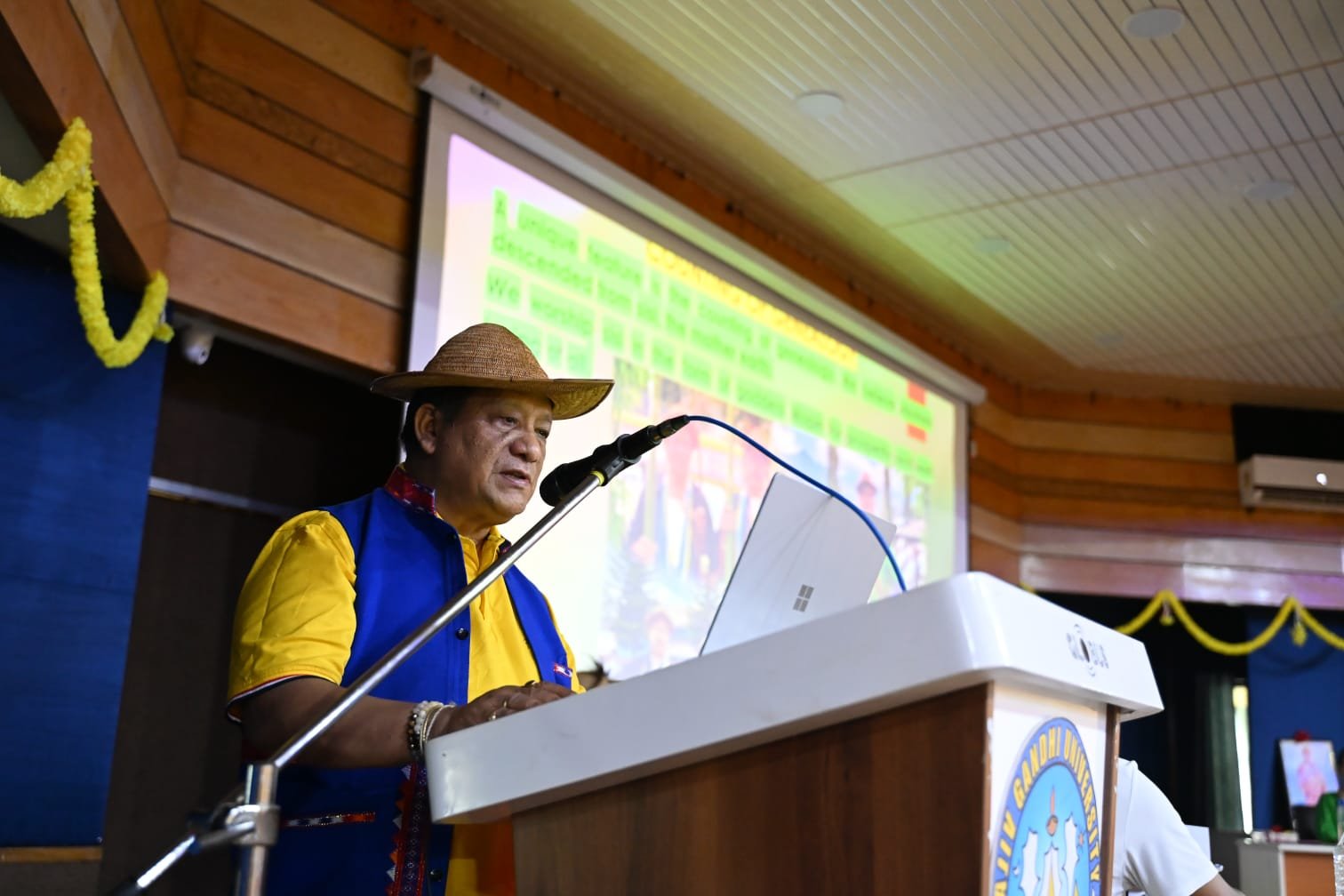
Dr. Koyu said that the Galos are the descendants of Abo Tani, therefore, they have inherited the Tani Culture, Tani language, Tani ritual and Tani religious practices that perhaps percolated down to us through ritual & religious practices, folklores, folksongs, folk tales and teachings of our fore fathers. The Galo dialect is a branch of Tani Language, and most of our cultural, religious and ritualistic practices are embedded in richness and powers of our old literatures particularly, hymns, mantras, phrases, idioms, that are still upheld by our“Nyijik-Nyibos, Viz-general PRIEST or Shamans and “Nyikoks”viz:the ’Orators’or decision makers. The duties of the ‘Nyijik-nyibs’ are to perform religious ritualistic affairs along with healing the ailing patients, whereas the duties of ‘Nyikoks’ are mostly Oratory and resolving of various disputes etc. The Nyikoks can perform their duties even by using other languages also whereas the ‘Nyijik-nyibos’ have to totally rely on the powers of own mother tongue dialect only.
Counting of genealogy is one of the significant characteristics of Galo culture and since the time immemorial it is being practiced both in ritualistic affairs and identifying any individual to deities, God and even to human society, counting of genealogy is of great importance and very unique one in Galo culture.
Most of the Galos believe that, genealogically, Abo Tani had descended from the mother earth the “SISI”. To count the genealogy of Abo Tani :- “SISI, SIBUK, BUKSIN, SINTU, TURI, RINI (ABO TANI) and RIKI (POMA TAKI) evil spirited brother. Therefore, the Galos worship the mother Goddess,‘Earth’ in the form of Goddess ‘MOPIN’forprosperioty, happiness and wellbeing of all.
The Galos believe in existence of malevolent and benevolent deities and spirits for which the practices of sprinkling the bloods of sacrificed animals and fowls on the altars, offering of local wine, rice-ginger paste and placing eggs the bamboo split in their festivals/rituals were very common in the rituals of Galo Community in the past. How ever, in absence of local priest, the organized prayer system of Donyipolo Kargugamgi movement has been gradually replacing such ritual practices day by day.
In his presentation he informed that the Birth Rituals of Galo community is based on its mythologies and belief systems of Galos and the system had originated from the recreation of Tani by ane Donyi at Kargukardi (a mythical holy place) As per mythology a ‘toy of baby boy’ was sculpted at Kargukardi with help of all ingredient like mixture of clay soil, small piece of Nikutani’s bone, air, water, leaves of holy plant and sunlight etc. wherein ane Donyi blessed in a divine soul. Since Nyia Tani had no natural parents, so, ‘CHITUM ANE & JORE ABO’ took the responsibility to nurture Tani and brought him up besides taught him the wisdom of life too.
Dr. Koyu informed that the parenting couples need to maintain certain taboos or restrictions for safe delivery and to get a healthy child. When the baby is in the womb of mother, the husband and other members of the family must take utmost care for the pregnant mother. The father, is restrained from hunting and killing of any living things; planting of big trees, bamboo and digging of fencing posts etc. The Galos believe in presence of divine soul in every living thing. So, they are restricted to hurting and killing of any living things during his wife’s pregnancy period. The husband who failed to follow such taboos had some side effects. It is said that a new born baby looked and behaved like a monkey when his father had killed a monkey during pregnancy period. Even planting of bamboo and trees entail some kind of side effects to his baby, as the new born baby is unable to walk despite attending the prime age. Even killing of snake entail a side effect to baby as his tongue behaves like that of a snake. So, the effect of harming any living things or souls is finally reflected in the new born baby. Such side effect in Galo is called “CHINAM”and we may term it a curse of the nature’. However, such curses can be done away with by performing rituals by Shamans or Nyibos. Therefore, the parent has to be very careful and try to maintain some taboo when the baby is in the womb of the mother.
The father has to focus much on nursing his pregnant wife, take care & love her besides, fulfilling some very peculiar desires of his pregnant wife as she wishes to have the taste of different types of food and drinks. It is believed that when a husband failed to fulfill all her wishes and desires, then the child on given birth will release too much of saliva that wet his clothes that may bring shame to father in the society. On the other hand, the pregnant mother also has to take precautions and restrictions as she is restricted to go to small rivulets, marshy land and jungles as it is believed that the ‘Yapom’ & ‘Nyipo’ (a female evil spirits) reside in such areas that may cause harm to the pregnant mother. Besides, the mother is restricted to go to dark places and also wear red clothes during pregnancy as red is the favorite color of ‘yapoms or evil spirits of mountains. She is also restricted to fell KODOK/KODUM trees (a class of banana tree) as they are owned by NYIPO/YAPOM (evil spirits).
Therefore, in order to take certain precautionary measures elders performed egg & chick liver divination to ensure that during pregnancy period there was no such unintentional harm made to any living beings. Such ritual is also called as “RO-KOGEK/pip chigek”. Besides, some rituals of animal & fowl sacrifice is done to propitiate the evil spirits and deities. YABUR APNAM is another ritual to ward off evil spirits and ghost as well as unfortunate things by sacrificing a fowl where a sample of bow and arrow are used in alter to shoot away unlucky elements.
CLAIMING RITUAL:- It is told that the rebirth process of Abo Tani took nearly 9 months and on the day of taking birth as ‘Nyia Tani’ almost all living beings assembled at “KARGU-KARDI” lomen (mythical holy place)to lodge their claim on the baby. However, the moment, Nyia Tani began to make a loud baby cry, ‘his poster parents “Chitum-Jore” immediately lodged their claims as “NgokkeNgokke” that means “Mine, the baby is mine.” Therefore, it is believed that many unseen forces try to lodge their claims over the new born so, we the parents or relative have to first claim that “new born baby is ours”. Such beliefs although seem to be a blind faith, however it gives a logical conclusion. E.g:- When a person dies due to drowning in water, it is believed that his soul was first claimed by spirits of water at the time of his birth, so he has been drowned. And when a person dies due to falling of a tree on him, it is believed that his soul was first claimed by the spirit of trees at the time of his birth, and so on. It symbolizes that everything in the world has a divine SOUL or spirit in itself.
However, in modern world the Galo babies are being born in hospitals that too by scissoring, and in operation theaters no parents or relatives are allowed to present to claim “NGOKKE NGOKKE”(It’s MINE).
In Galo culture, the advent of a new born baby irrespective of male or female brings happiness and proud feelings for parents and family members. The parents regard a male child as continuer of a family clan whereas birth of female child is deemed as “NYIBO GE” means ‘guest child’ that would strengthen social relations in the society.
RITUALS & RESTRICTIONS DURING CHILD BIRTH:
Normally an elderly woman of the family attends the pregnant mother at the time of her labor pain however, in absence of any one from the family members an experienced woman is invited to attend the laboring mother. In turn she is rewarded suitably. Normally the male members and youths are restricted to attain when the child is being born, as such stage is deemed period of impurity. Such belief system, perhaps may be a blind faith, but it is also believed that when a male person attends such event of child birth, then he is surely harmed with imperfection in life, (ABUR-UNLUCKY) such as he becomes dull in oratory and hunting as well as in earning. As a mark of honoring dissecting the baby’s navel from the womb pipes, a ritual named a “KIN-PERIN” is also performed by sacrificing a hen with a prayer for early healing of the injured naval of the child. Such chicken is cooked for mother’s consumption. For five days, she has to sleep in a separate bed at “PIMMEY” area (separate small kitchen for women) and look after the baby. During such period, her food items are cooked separately for her only. So, the MOTHER IS RESTRICTED to stay inside the “PIMMEY” until navel falls (It is called “KIINE RUNAM” in Galo. Such period is regarded as “IMPURE”.
NEIR IRNAM & EPEN PANAM and NILUM DONAM: On 5th day of the child birth, both the baby and mother is given bath in which leaves of “KEKIR” medicinal ginger is mixed. The father or any elder has to fetch a cane for knitting of “EPEN” a belt made of canes used for carrying the baby on the mother’s back. But using of a deformed or injured cane is not allowed except a fully grown one. A piece of ginger is attached in such belt. Old persons are invited, OPO or local wine is distilled, fowl and pigs are sacrificed to arrange a feast. The black thread is tied around wrist and ankles of the child symbolizing owning of child.
NAMKARAN, or “NEMIN-NAM” keeping a suitable name to baby by the parents or some seniors of the family. In Galo, the name of the child is derived from the last syllable of father’s name. Suppose father’s name if TATO then last syllable is ‘TO’ & his son’s name should begin with “TO” only such as “TO+MO” = TOMO. In certain cases, the priest is also involved to perform divination with the help of egg/Tajir(holy plant) by chanting mantra as to whether the chosen name is suitable or not. A piece of Tajir(holy plant and an egg is tied with a rope is hanged in the air. If the name is appropriate the object would automatically make certain movements without being touched by any one but if name is not suitable it will never move. In certain cases the child also cries if it does not like the name. If baby is happy with the name it is confirmed even by seeing the behavior of baby. General naming in Galo for male child is from “TA” eg:- “TAMO” for daughter it is from “YA” eg:- “YAMO”. However, in modern days such practices are not dying out due to non availability of priest and also conversion of our GALO people into alien religions like CHRISTIANITY etc. How ever, under “KARGU-GAMGI” system we have revived it by reforming it by organizing group prayers and blessing session in certain cases where the parents show some interest.
On the same day lot of rituals are accompanied. Besides, NEIR IRNAM or NILUM DONAM (party for child birth), ‘NEMIN-NAM’ i.e. NAMKARAN, the GALOs also have a ritual called ‘NYAMI-NYAMSA’ or “BIYI BICHA” in which the child is carried on the back using new clothes and “EPEN” by the mother and she comes out of PIMMEY area to out side the house and climb down the ladder/staircase and goes to the ground or lawn to demonstrate some tradition. If he is a son then a senior person would dramatize like a hunter with a bow and arrow and shoot at certain objects towards northern side (uttering SODUM GO), means ‘it was a deer or wild animal. In case of daughter an elderly woman has to show the way of using “RAAJU” a fish trap to catch fishes etc towards southern side. (Uttering: NGOPI GO..etc) and people around will laugh and make merry & fun out of it. The visitors would offer gift items like ‘OPO’ (wine), meat, cash, tadok(local beads), clothes, ornaments etc as a mark of welcoming and blessing the baby or (ANYIK KAAJO)NAZRAANA etc. Such time and function is deemed as “AI-AGAM ALO” lucky day. The maternal aunties and uncles tie “LEMUR LAKMUR” safety thread with some costly bead on wrist and ankles. Such practice is a kind of blessing the new born baby. Such function is organized as per capacity of the parents. Feast is organized in which “AMIN TAKEY” a kind of “Galo khichri” is also prepared that is deemed holy and lucky. Elderly women who helped the family at the time of child birth are also suitably rewarded.
When the child is 1-3months old the parents take him to maternal uncle’s house for “layap” (blessings of uncles and family) He also sacrifice a hen or a pig and offer gifts with LEMUR/LAKMUR tying of security threads like RIDDIN or black thread with local beads and LAYAP with a hen’s feather pasted with the hair of the child with a prayer for good health and longevity of the child.
In Galo Culture, child birth not only brings happiness to parents and family members but it becomes a social responsibility of all. So, any member of the society has to take care and advise a child when they meet him. When the child is brought up, the GALOS have a belief that the baby is being looked after by the ‘Goddesses CHITUM ANE & JORE ABO.’ However, when the baby is in the mother’s womb, it is the responsibility of the parents to take care, nurture, think good and speak good etc.
We all know that the entire world is changing, and culture of every society is also subject to change. However, we cannot uproot our age old practices at the cost of modernity. Neverthless, I strongly feel that promoting and preserving own tradition is completely relying on mother tongue language only.