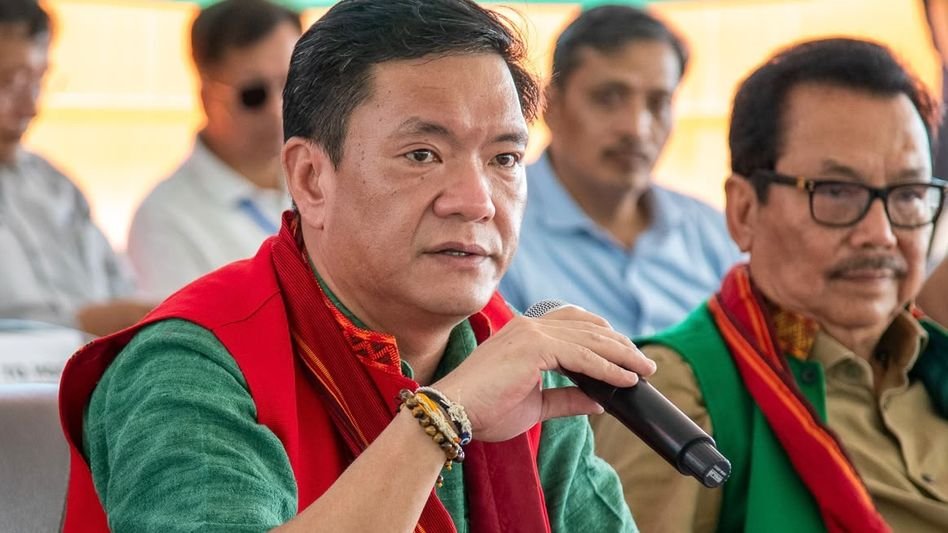

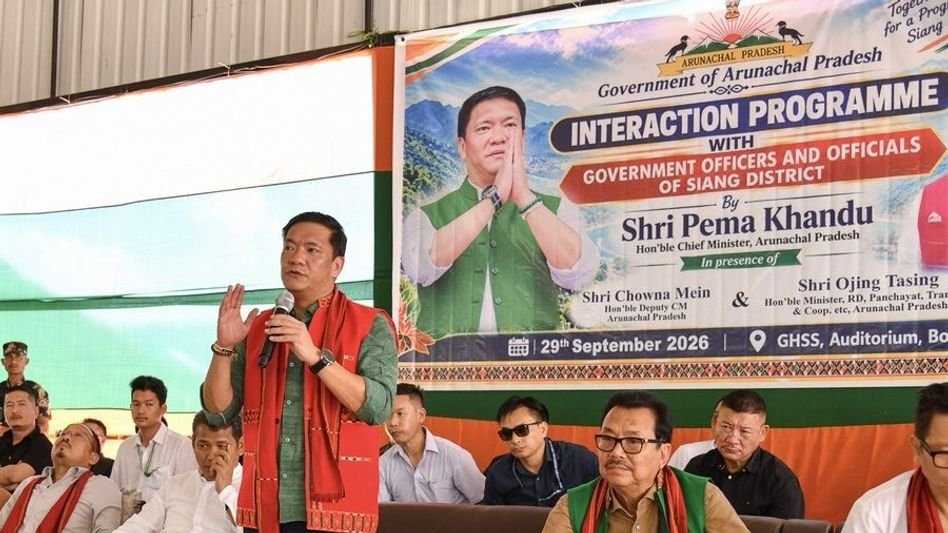
The Chief Minister didn’t just attend a meeting in Boleng — he delivered a message that cuts right to the heart of governance in Arunachal’s tribal heartland.
Arunachal Pradesh Chief Minister Pema Khandu made a direct and pointed visit to Boleng on September 29, sitting down with officers and officials of the Siang district in what was less of a routine administrative interaction and more of a wake-up call wrapped in a conversation.
The message was simple, but the weight behind it was anything but light. Khandu told the gathering that the decisions being made right now — today, this week, this year — will ripple far into the future, shaping the lives of generations who aren’t even old enough to vote yet. He wasn’t mincing words. Delays, he said, aren’t just bureaucratic inconveniences. They have real consequences for real people, especially in a region as remote and underserved as Siang.
There’s something worth noting about the choice of Boleng as the venue. It’s not Itanagar. It’s not a state capital conference room. Coming directly to the district sends its own signal — that governance needs to show up where the people are, not the other way around.
At the core of Khandu’s address was a call for collective responsibility. He didn’t place the burden on one department or one level of government. He spoke about shared ownership of the challenges facing Siang — the kind of thinking that’s easy to say on paper but frustratingly rare in practice. He made clear that pointing fingers and passing files isn’t going to cut it when the stakes involve entire communities waiting on the other side of a decision.
Dialogue, he stressed, is not optional. Discussions and interactions between officials and the public aren’t just good optics — they build the kind of awareness that leads to action. When officials engage, communities understand what’s happening and why. That understanding, Khandu argued, is what drives responsible behavior from both sides.
Perhaps the most thought-provoking part of his remarks came when he addressed the unique position government employees hold in tribal societies. In places like Siang, a government officer isn’t just a bureaucrat — they’re often among the most educated, most connected, and most trusted figures in the community. Khandu urged them to own that influence. To use it not for personal advantage, but to push for awareness and the larger public good. That’s a responsibility that goes well beyond any job description.
It’s a reminder that Arunachal’s challenges aren’t solved from Itanagar alone. They require people on the ground — in the districts, in the villages — to act with both authority and conscience.
The interaction was also shared on Khandu’s official X (formerly Twitter) account, reaching an audience beyond the room. A deliberate move, no doubt, to ensure the message wasn’t just heard by officials in Boleng but understood as a broader mandate.
Siang has long grappled with issues around connectivity, development, and administrative reach. Whether this visit translates into the kind of tangible, timely action Khandu spoke of — that’s the question the people of the district will be watching very closely.
Words matter. But in a place like Siang, actions matter more.