


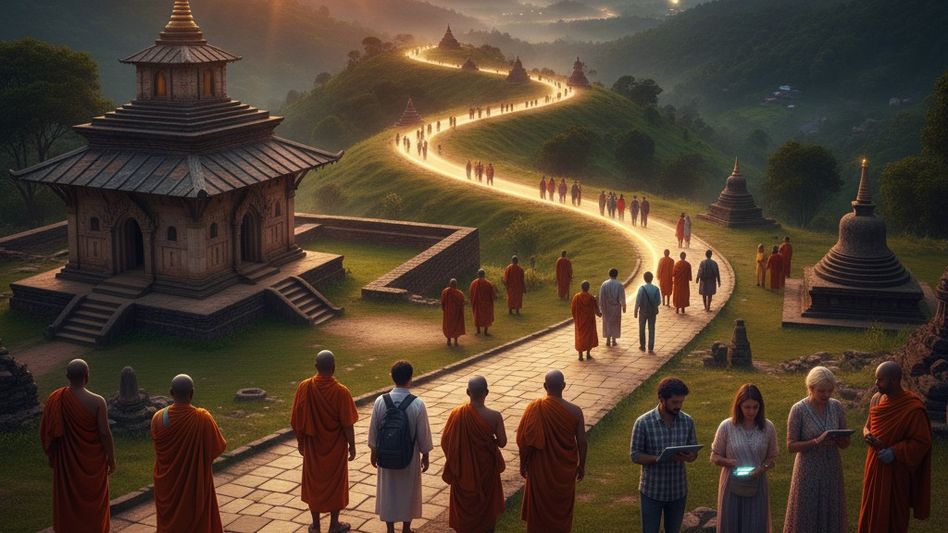
Guwahati, Assam – In a significant boost to spiritual and cultural tourism in India’s Northeast, Finance Minister Nirmala Sitharaman announced a new scheme for the development of Buddhist circuits during the Union Budget 2026-27 presentation. The initiative targets six states—Arunachal Pradesh, Sikkim, Assam, Manipur, Mizoram, and Tripura—aiming to preserve ancient Buddhist heritage while enhancing pilgrimage and visitor infrastructure.
This move positions the region as a key hub for religious tourism, leveraging its unique confluence of Theravada, Mahayana, and Vajrayana Buddhist traditions that have coexisted for centuries. The scheme addresses long-standing gaps in attention to Northeastern Buddhist sites compared to more prominent circuits elsewhere in India.
Core Components of the Buddhist Circuit Scheme
The proposed development programme focuses on holistic enhancement of Buddhist pilgrimage and heritage sites, with key elements including:
- Preservation and restoration of ancient temples and monasteries
- Establishment of pilgrimage interpretation centres to educate visitors on historical and spiritual significance
- Improved connectivity to remote and hard-to-reach locations
- Upgradation of basic amenities for pilgrims and tourists, such as rest areas, sanitation, and accessibility features
These interventions aim to make sites more accessible, protect cultural legacy, and create sustainable economic opportunities through increased footfall and local employment.
Strategic Importance for Northeast Tourism
The Northeast’s Buddhist landscape features iconic sites like Tawang Monastery in Arunachal Pradesh, Rumtek Monastery in Sikkim, Hayagriva Madhava Temple in Assam (revered across traditions), and various heritage temples in Manipur, Mizoram, and Tripura. Despite their spiritual depth, these locations have remained relatively underexplored due to infrastructure limitations and geographical challenges.
By integrating them into a planned Buddhist circuit, the scheme seeks to:
- Attract domestic and international pilgrims seeking authentic spiritual experiences
- Boost local economies through tourism-related jobs, homestays, handicrafts, and services
- Promote cultural exchange and highlight the region’s role as a civilizational bridge in Buddhist history
- Support eco-friendly and community-led tourism models
Industry experts have welcomed the announcement as a visionary step toward diversifying India’s tourism offerings beyond traditional hubs, with potential to generate employment and position the Northeast as a premium destination for experiential and heritage travel.
Broader Budget Context for Regional Development
The Buddhist Circuit scheme forms part of wider tourism and eastern India-focused proposals in the budget, including the development of five tourism destinations in Purvodaya states, provision of 4,000 electric buses for sustainable mobility, and an integrated East Coast Industrial Corridor. These align with the government’s emphasis on balanced regional growth, job creation, and leveraging cultural assets for economic upliftment.
While specific budget allocations and implementation timelines for the scheme are yet to be detailed, the announcement signals strong central commitment to unlocking the Northeast’s tourism potential through targeted heritage preservation and infrastructure support.
As preparations begin, stakeholders anticipate detailed guidelines and partnerships that will ensure inclusive benefits for local communities while safeguarding the ecological and spiritual sanctity of these sacred sites.
Relevant Tags
Union Budget 2026, Buddhist Circuit Northeast, Assam Tourism Boost, Arunachal Pradesh Buddhist Sites, Sikkim Rumtek Monastery, Manipur Mizoram Tripura Heritage, Spiritual Tourism Northeast, Nirmala Sitharaman Budget, Purvodaya States Development, Religious Tourism India
Hashtags
#UnionBudget2026 #BuddhistCircuit #NortheastTourism #Assam #ArunachalPradesh #Sikkim #SpiritualTourism #TawangMonastery #RumtekMonastery #NortheastDevelopment
