


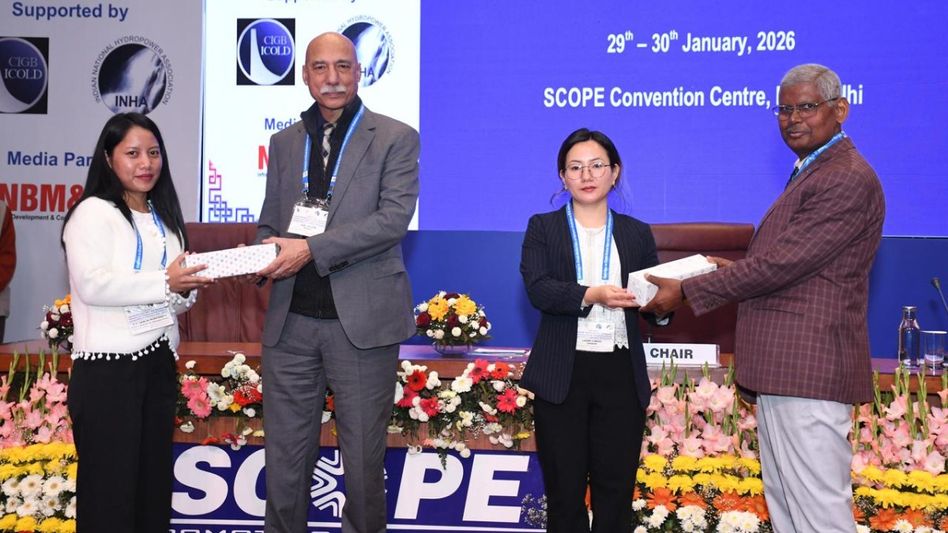
New Delhi – Researchers from Arunachal Pradesh’s Centre for Earth Sciences and Himalayan Studies (CESHS) delivered a stark warning about escalating climate threats to dams and hydropower infrastructure in the Eastern Himalaya. Presenting at the International Conference on Climate-Resilient Dams and Hydropower Infrastructure (January 29–30), Dr. Laxmi Linggi and Dr. P. C. Vanlalnunchhani spotlighted the growing dangers of glacial lake outburst floods (GLOFs) and cascading hazards in this seismically active and ecologically fragile region.
Their research paper, titled “Implications of Cascading Hazards and GLOF Risks on Infrastructure in the Eastern Himalaya,” calls for immediate upgrades in monitoring, early warning mechanisms, and risk-informed design to protect vital energy projects amid intensifying climate change impacts.
Spotlight on GLOFs and Cascading Hazards
The Eastern Himalaya faces heightened vulnerability due to rapid glacial melt, which expands high-altitude lakes and increases the likelihood of sudden outbursts. GLOFs can unleash massive volumes of water, sediment, and debris downstream, endangering dams, power stations, roads, and communities.
The scientists emphasized cascading hazards—where one event triggers secondary disasters like landslides, flash floods, or structural failures—posing compounded risks to hydropower facilities. Arunachal Pradesh, with its ambitious hydropower ambitions and numerous planned or operational projects, stands particularly exposed in this dynamic landscape.
Urgent Recommendations for Resilience
To mitigate these threats, the CESHS team advocated for:
- Enhanced real-time monitoring of glacial lakes and vulnerable zones.
- Deployment of robust early warning systems integrated with local communities.
- Adoption of risk-informed planning that incorporates climate projections into dam design and operations.
- Integrated “source-to-sink” methodologies blending cryospheric studies, extreme weather modeling, and comprehensive hazard assessments.
They extended an open invitation for collaborations with national and international experts in GLOF research and flood risk management, aiming to develop proactive, science-backed strategies that ensure long-term sustainability.
Conference Context and Broader Implications
The event convened leading voices from institutions such as IIT Delhi, India Meteorological Department (IMD), IITM, Central Water Commission, National Disaster Management Authority (NDMA), National Dam Safety Authority, major hydropower entities like NHPC and NTPC, and global specialists. Discussions reinforced the consensus on collaborative, evidence-driven approaches to build climate-resilient infrastructure in the Himalayas.
For Arunachal Pradesh—home to significant untapped hydropower potential—this warning arrives at a critical juncture. Balancing energy security with environmental safeguards remains essential as climate variability intensifies glacial instability and extreme weather events.
The CESHS presentation underscores the need for policy integration of advanced scientific insights to prevent potential catastrophes, protect downstream populations, and sustain development in one of India’s most biodiverse and geologically sensitive regions.
As Himalayan ecosystems evolve under climate pressure, such research-driven alerts pave the way for adaptive measures that prioritize both infrastructure longevity and ecological integrity.
Relevant Tags
Arunachal Pradesh Climate Risks, Himalayan Dams GLOF, CESHS Research, Glacial Lake Outburst Floods, Eastern Himalaya Hazards, Climate-Resilient Hydropower, Arunachal Scientists Conference, GLOF Monitoring Warning, Cascading Hazards Infrastructure, Northeast India Climate Adaptation
Hashtags
#HimalayanDams #GLOFRisks #ArunachalClimate #CESHSArunachal #ClimateResilientDams #EasternHimalaya #HydropowerRisks #GlacialMelt #NortheastIndia #SustainableEnergy
