


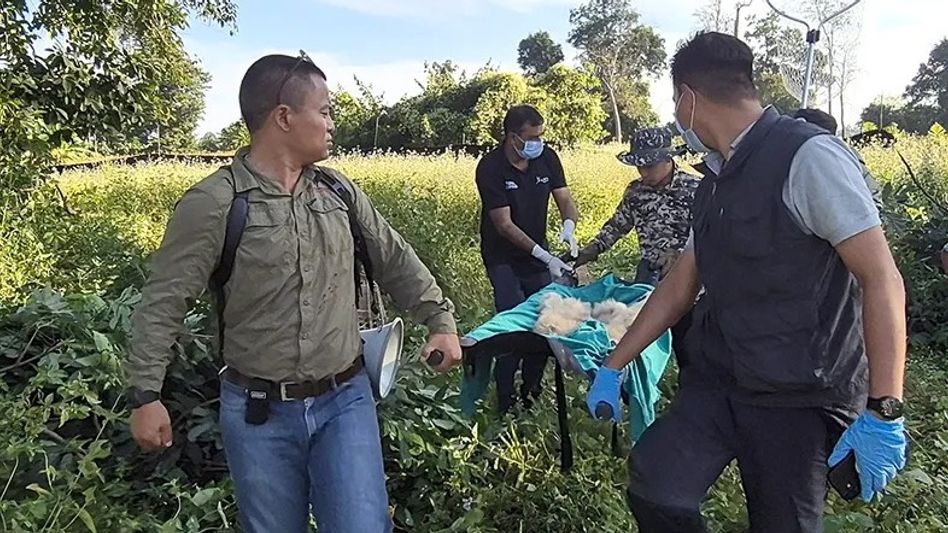
In a remarkable feat of conservation, a family of endangered Hoolock gibbons – comprising an adult male, adult female, and a juvenile – has been successfully rescued and rehabilitated following a challenging four-day operation in the Lower Dibang Valley district of Arunachal Pradesh. The arboreal apes, India’s only native ape species, were trapped high in a solitary 45-metre ficus tree in Horu Pahar village, their habitat severely fragmented by agricultural expansion.
The rescue, led by the Mehao Wildlife Sanctuary’s forest department in collaboration with the Wildlife Trust of India (WTI), highlights the urgent threats posed by deforestation to these Schedule I (endangered) primates, which serve as critical indicators of forest ecosystem health.
The Perilous Predicament
The gibbon family had been isolated for weeks, their once-connected forest canopy reduced to a single towering tree amid encroaching farmlands. As strictly arboreal creatures, Hoolock gibbons rarely descend to the ground, where they face fatal risks from predators and unfamiliar terrain. Forest officials noted that without intervention, the family’s survival odds were rapidly diminishing due to nutritional stress and exposure.
The operation commenced upon reports from local villagers, who alerted authorities to the distressed primates. Teams arrived to find the gibbons clinging precariously to the upper branches, vocalising in distress – a haunting call that underscored their vulnerability.
A Meticulous Four-Day Effort
The extraction demanded precision and expertise, given the tree’s dizzying height and the gibbons’ skittish nature. Mountaineering volunteers provided essential rope-climbing support, enabling safe access to the canopy. Over four grueling days, rescuers employed non-invasive techniques, including soft nets for potential falls and behavioral observation to minimize stress.
Post-rescue, WTI veterinarians conducted thorough health assessments, confirming the animals were underweight and dehydrated from prolonged isolation. “The family had been nutritionally stressed and isolated for a long time. Their survival chances would have dropped sharply without timely intervention,” said Dr. Bhaskar Choudhury, leader of the WTI veterinary team.
Successful Release and Monitoring
Following stabilization with fluids and nutrient supplements, the gibbons were translocated to the lush environs of the Mehao Wildlife Sanctuary, a protected haven ideal for their rehabilitation. The release was executed under optimal conditions, allowing the family to bond and acclimate naturally.
Encouragingly, all three individuals were sighted near the release site on Friday morning, appearing stable and foraging actively. “We spotted all three individuals near the release site on Friday morning and they appear to be in a stable condition,” confirmed Mito Rumi, Divisional Forest Officer (DFO) of Mehao Wildlife Sanctuary.
Broader Conservation Challenges
This rescue is part of a larger crisis: habitat fragmentation is pushing Hoolock gibbon populations to the brink across Arunachal’s eastern districts. Officials have identified additional stranded families in nearby Denlo village, with staggered operations planned over the next three months to address the treacherous terrain and tree heights.
“Extracting gibbons from such heights requires precision, calm coordination, and a deep understanding of their behaviour. Any misstep could have led to fatal falls,” remarked Sunil Kyarong, Director of WTI. DFO Rumi added, “Their habitat had been reduced to a single tree. With no canopy connectivity, the animals were being forced to come down to the ground, which is extremely dangerous for an arboreal ape.”
Community involvement has been pivotal, with villagers providing logistical support and pledging vigilance against further encroachment. “Community support has been strong, and together we will ensure the survival of these gibbons,” Rumi emphasized. Dr. Choudhury echoed the sentiment: “They are vital indicators of forest health, and habitat fragmentation is pushing these populations to the brink.”
A Call for Sustained Action
This operation not only saves one family but amplifies the need for corridor restoration and anti-poaching measures to safeguard Arunachal’s biodiversity hotspots. As the gibbons swing freely once more in Mehao’s canopy, their story serves as a beacon of hope – and a stark warning – for the fragile balance between human progress and wildlife preservation in India’s northeastern frontier.
(Source: India Today NE)
