


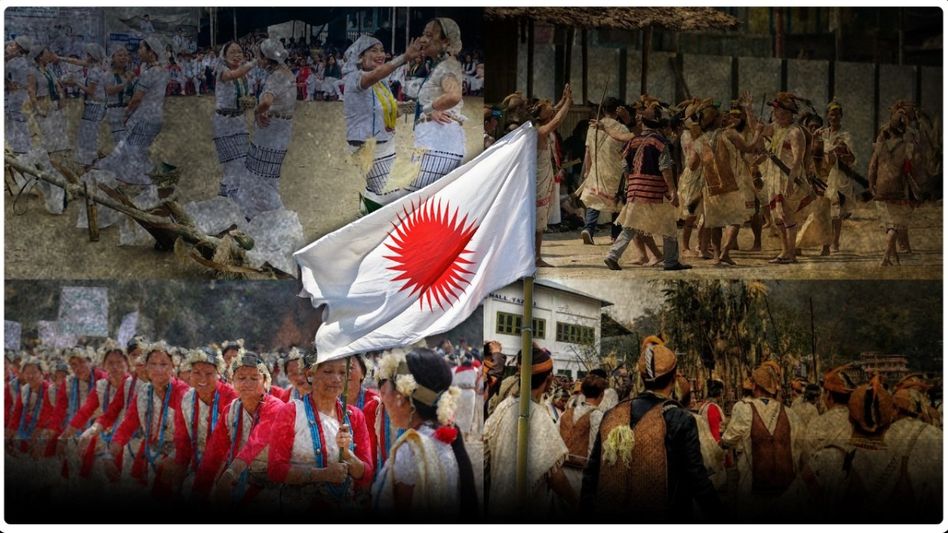
In the mist-shrouded hills of Arunachal Pradesh, where the first rays of sunlight kiss the snow-capped peaks, the indigenous faith of Donyi Polo – worship of the Sun (Donyi) and the Moon (Polo) – continues to be the spiritual and cultural heartbeat of more than a dozen major tribes, including the Adi, Galo, Nyishi, Apatani, Tagin, and Hill Miri. Far from being a relic of the past, Donyi Polo remains a living, dynamic force that binds communities, guides moral conduct, and offers a unique indigenous lens on ecology, cosmology, and coexistence.
The Essence of Donyi Polo
At its core, Donyi Polo is a monotheistic yet animistic worldview that reveres the Sun and Moon as supreme manifestations of Ane Donyi (Mother Sun) and Ato Polo (Father Moon), the eternal parents who govern life, light, and cosmic order. Every natural element – rivers, mountains, forests, animals – is seen as imbued with divine spirit, demanding respect and reciprocity. This reverence translates into a deep-rooted environmental ethic: harming nature is akin to harming one’s own ancestors.
Unlike organised religions with rigid scriptures, Donyi Polo is transmitted orally through myths, hymns (called ponung, bari, or rike), and rituals performed by miris (priests) during festivals such as Solung, Mopin, Nyethong, Dree, and Boori Boot. The faith has no idols, temples, or conversion mechanisms – only sacred groves (gumpa or nyemah), prayer flags, and community hearths where people gather to chant and offer rice beer, meat, and millet to Donyi Polo.
A Renaissance of Identity
The modern revival of Donyi Polo began in the late 20th century, spearheaded by visionary reformer Talom Rukbo, revered as the “Father of Donyi Poloism.” Facing the rapid spread of missionary Christianity and Hinduism, Rukbo (who passed away in 2022) sought to codify and institutionalise indigenous beliefs to protect tribal identity. In 1986, he founded the Donyi Polo Yelam Mission, followed by prayer halls (Ganggings) and a standardised prayer book – milestones that gave the oral tradition a visible structure without diluting its essence.
Today, thousands of Ganggings dot the landscape from Tawang to Tirap, serving not just as places of worship but as community centres for education, conflict resolution, and cultural preservation. The iconic Donyi Polo statue at the Science Centre in Itanagar and the grand Donyi Polo Airport name are symbols of how deeply the faith has been woven into modern Arunachalee identity.
Beyond Religion: A Philosophy of Harmony
Donyi Polo’s influence extends far beyond rituals:
- Ecology: Sacred groves are protected as abodes of deities; hunting and fishing are regulated by lunar calendars.
- Social cohesion: Disputes are resolved through miri-led mediation, upholding customary laws (tani justice).
- Gender balance: The Sun (female) and Moon (male) represent cosmic gender equilibrium, reflected in many tribes’ matrilineal or bilateral inheritance systems.
- Education: Donyi Polo schools teach indigenous folklore alongside modern curricula, ensuring children grow up rooted yet global.
Even families that have adopted Christianity or Hinduism often retain Donyi Polo practices – participating in Solung feasts, tying prayer threads (soman), or invoking Donyi Polo during weddings and funerals – a beautiful syncretism unique to Arunachal.
Challenges and the Road Ahead
Despite its resurgence, Donyi Polo faces pressures from rapid urbanisation, land alienation, and the allure of organised religions. Young people migrating to cities sometimes drift from rituals, while sacred forests fall to infrastructure projects. Yet, the faith’s inherent flexibility – its lack of dogma and emphasis on lived practice – gives it remarkable resilience.
As Arunachal strides into the future with airports, highways, and hydropower dams, Donyi Polo remains its moral compass: a gentle reminder that progress must not sever the sacred bond between people and the land lit by the eternal Sun and Moon.
In the words of a Galo elder: “Donyi ane, Polo ato – takrun tapak, takrun tasup.” (Mother Sun, Father Moon – they give light, they give life.)
For the people of Arunachal, these celestial parents are not distant deities, but ever-present guardians of a culture that continues to shine beyond the horizon.
(Source: India Today NE)
