


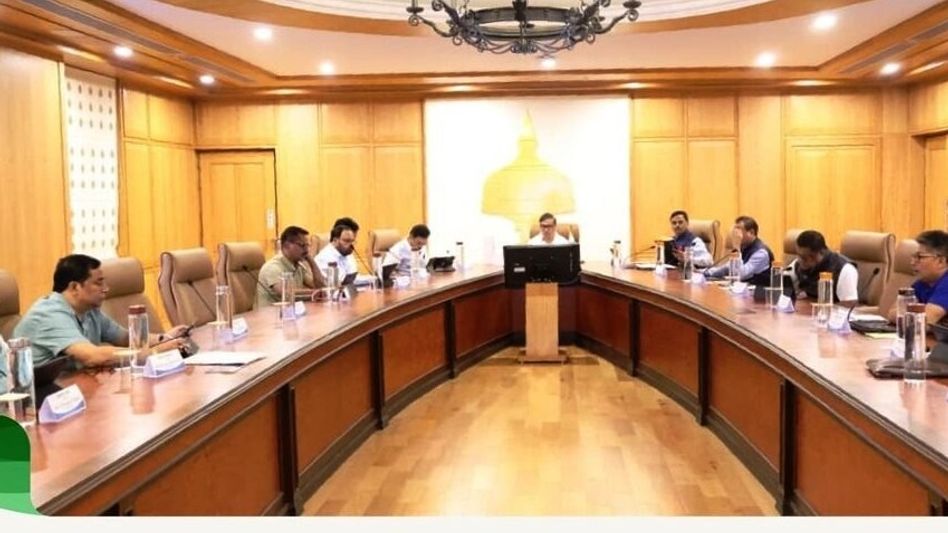
In a landmark move towards historical transparency, the Assam state cabinet has approved the tabling of the Justice (Retd.) T.U. Mehta Commission Report – a non-government panel inquiry into the violence during the Assam Agitation – in the state assembly during its upcoming five-day session beginning Tuesday. Chief Minister Himanta Biswa Sarma announced the decision on November 23, describing it as a “first” for the assembly, where a report prepared outside government structures will be formally placed before legislators.
The cabinet also greenlit the distribution of copies of the long-suppressed 1983 Tewary Commission Report, which was originally tabled in 1987 but remained largely inaccessible to the public. This dual action responds to persistent demands from civil society, particularly the All Assam Students’ Union (AASU), for unearthing and disseminating documents related to the tumultuous Assam Agitation (1979–1985).
Historical Context: Echoes of the Assam Agitation
The Assam Agitation, a mass movement led by AASU and other indigenous groups, protested against undocumented immigration from Bangladesh, aiming to safeguard Assam’s demographic and cultural identity. It culminated in the 1985 Assam Accord, which set March 24, 1971, as the cutoff date for detecting “foreigners.” However, unresolved issues like Clause 6 safeguards for indigenous communities continue to fuel debates.
The Justice (Retd.) T.U. Mehta Commission, constituted by civil society organisations, specifically probed episodes of violence during the agitation, including the horrific 1983 Nellie massacre where over 2,000 people, mostly Bengali-speaking Muslims, were killed in a single day amid controversial elections. The Tewary Commission, appointed by the then-Congress government under President’s rule, investigated statewide unrest that year, documenting 8,019 incidents resulting in 2,072 deaths. Despite its neutrality, the report was shelved, symbolising the era’s deep-seated grievances.
Key Developments and Cabinet Decisions
The cabinet’s Sunday meeting cleared the Mehta report for tabling, marking a historic precedence. Copies of the Tewary report will also be circulated among MLAs, ensuring wider access. CM Sarma emphasised the urgency, stating:
“It is a crime against humanity to hide history.”
The decision follows AASU’s advocacy for public release, arguing it would allow “new generations to understand the circumstances” of the period. Even though the Tewary report contains “some negative things on AASU,” the student body has endorsed its dissemination to present “all sides” of the narrative.
In a broader legislative push, the cabinet approved 27 bills, including:
- Land allotments for tea garden workers
- Regulations on fees in minority-run private educational institutions
- Enabling legislation for a philanthropic university supported by the Azim Premji Foundation
Political Reactions and Tensions
The announcements have reignited partisan exchanges. CM Sarma rebuffed opposition from the Congress, accusing its leadership of being “hollow and immature” for opposing the Tewary report’s circulation – a document commissioned under their own government. He dismissed claims of political gain for the BJP, asserting:
“Congress thinks there are provocative things, that the BJP will gain politically. But there is nothing of the kind. It is just a historic piece that will be lost to time if the copies are not made public.”
Sarma praised the Tewary report as “generally neutral and compiled through much hardships,” underscoring its value as a factual chronicle rather than a tool for division.
Implications for Assam’s Politics and Society
This tabling represents a pivotal step in addressing the Assam Agitation’s lingering scars, promoting accountability and education on one of India’s most violent chapters of ethnic strife. By making these reports public, the government aims to foster informed discourse on immigration, indigenous rights, and reconciliation – issues central to Assam’s socio-political fabric amid ongoing Citizenship Amendment Act (CAA) debates.
Civil society views it as a victory for transparency, potentially paving the way for Clause 6 implementation and healing communal divides. However, critics caution against selective interpretations that could exacerbate tensions in a state still navigating its multicultural identity.
As the assembly session unfolds, the reports’ reception will test Assam’s political maturity, offering a chance to convert historical wounds into lessons for a more inclusive future.
(Source: India Today NE)
