


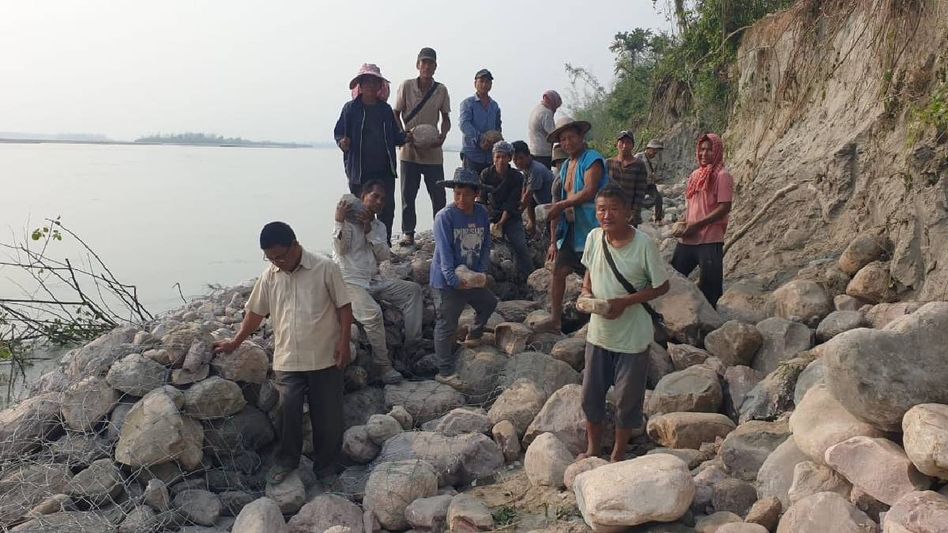
Borguli – Farmers in Borguli village, located in Arunachal Pradesh’s East Siang district, have taken matters into their own hands to address the severe erosion caused by the Siang River. The community has built boulder bunds along the riverbank in an effort to protect their agricultural lands, which are increasingly threatened by the river’s relentless flooding. Despite their efforts, the farmers are now calling for urgent government intervention to implement more robust and permanent solutions to the ongoing crisis.
The Siang River’s erosion has been a long-standing issue for Borguli and surrounding villages like Sigar, Raling, Motum, Seram, Kongkul, and Namsing, with vast tracts of fertile farmland being washed away over the years. The farmers’ initiative to construct boulder bunds—barriers made of large rocks and stones—aims to slow down the river’s destructive flow and safeguard their livelihoods. However, they acknowledge that these makeshift measures are only a temporary fix and cannot withstand the river’s force during peak monsoon seasons, as past efforts like bamboo spurs have been washed away.
The community has expressed frustration over the lack of effective government action, despite previous appeals for assistance. Local farmers have urged the state government to deploy experts to study the erosion problem and implement sustainable flood control measures, such as advanced boulder spurs or embankments, to protect the region. They also highlighted the need for financial support to rehabilitate families who have lost their homes and lands to the river’s encroachment, pointing to the example of Seram village, where 10 families were rendered homeless due to erosion.
The situation in Borguli reflects a broader challenge in Arunachal Pradesh, where traditional flood control methods have often failed to address the unique dynamics of the Siang River, exacerbated by factors like deforestation and upstream activities. The farmers’ plea for government intervention underscores the urgent need for a coordinated, long-term strategy to mitigate the impact of erosion on vulnerable communities in the region, ensuring both environmental sustainability and economic stability for those who depend on the land.
