


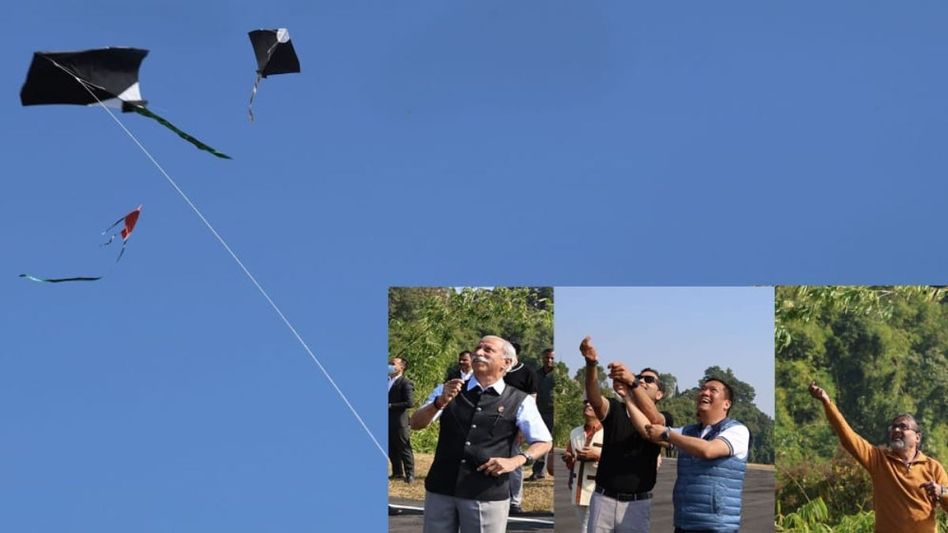
Itanagar, January 14, 2025 – In a vibrant celebration of Makar Sankranti, Arunachal Pradesh’s Governor Lt. General K.T. Parnaik (Retd.) and Chief Minister Pema Khandu participated in a kite-flying event at Indira Gandhi Park in Itanagar. The festival, which signifies the sun’s transition into the Capricorn zodiac (Makara Rashi), heralds longer days and the commencement of the harvest season.
Significance of Makar Sankranti
Makar Sankranti is a prominent festival in India, symbolizing the end of winter and the onset of the harvest period. It is marked by various traditions, including kite flying, which is believed to expose participants to sunlight, aiding in the prevention of winter-related ailments and skin conditions. Additionally, kite flying serves as a form of thanksgiving to the Sun God for the bountiful harvest.
Kite Flying Tradition
The practice of flying kites during Makar Sankranti is deeply rooted in Indian culture. Exposure to the sun during this activity is thought to eliminate harmful bacteria and promote well-being. Regions like Gujarat and Rajasthan are renowned for their grand kite-flying events, with Gujarat hosting the International Kite Festival since 1989.
Event Highlights
The event in Itanagar witnessed enthusiastic participation from the public, with the Governor and Chief Minister engaging in friendly kite-flying competitions. Such events not only preserve cultural heritage but also strengthen community bonds.
Cultural Importance
Makar Sankranti is celebrated across India with regional variations. In Bihar, it is known as Til Sakraat or Dahi Chura, where traditional foods like til (sesame) and chura (flattened rice) are prepared. The festival fosters a sense of unity and shared cultural identity among diverse communities.
Conclusion
The participation of Arunachal Pradesh’s leaders in the Makar Sankranti kite-flying event underscores the festival’s significance in promoting cultural values and community engagement. Such celebrations play a vital role in preserving traditions and fostering social cohesion.
Arunachal Pradesh Leaders Celebrate Makar Sankranti with Kite Flying Event
Itanagar, January 14, 2025 – In a vibrant celebration of Makar Sankranti, Arunachal Pradesh’s Governor Lt. General K.T. Parnaik (Retd.) and Chief Minister Pema Khandu participated in a kite-flying event at Indira Gandhi Park in Itanagar. The festival, which signifies the sun’s transition into the Capricorn zodiac (Makara Rashi), heralds longer days and the commencement of the harvest season.
Significance of Makar Sankranti
Makar Sankranti is a prominent festival in India, symbolizing the end of winter and the onset of the harvest period. It is marked by various traditions, including kite flying, which is believed to expose participants to sunlight, aiding in the prevention of winter-related ailments and skin conditions. Additionally, kite flying serves as a form of thanksgiving to the Sun God for the bountiful harvest.
Kite Flying Tradition
The practice of flying kites during Makar Sankranti is deeply rooted in Indian culture. Exposure to the sun during this activity is thought to eliminate harmful bacteria and promote well-being. Regions like Gujarat and Rajasthan are renowned for their grand kite-flying events, with Gujarat hosting the International Kite Festival since 1989.
Event Highlights
The event in Itanagar witnessed enthusiastic participation from the public, with the Governor and Chief Minister engaging in friendly kite-flying competitions. Such events not only preserve cultural heritage but also strengthen community bonds.
Cultural Importance
Makar Sankranti is celebrated across India with regional variations. In Bihar, it is known as Til Sakraat or Dahi Chura, where traditional foods like til (sesame) and chura (flattened rice) are prepared. The festival fosters a sense of unity and shared cultural identity among diverse communities.
Conclusion
The participation of Arunachal Pradesh’s leaders in the Makar Sankranti kite-flying event underscores the festival’s significance in promoting cultural values and community engagement. Such celebrations play a vital role in preserving traditions and fostering social cohesion.
