


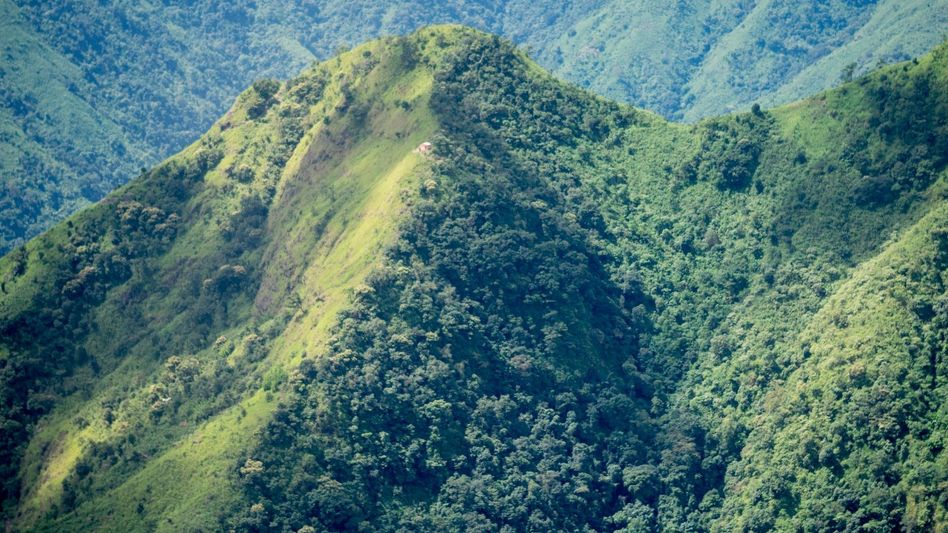
The India State of Forest Report (ISFR) 2023, released by Union Environment Minister Bhupendra Yadav, revealed a concerning trend of deforestation in Meghalaya.1 The report documented a significant loss of 84.07 square kilometers of forest cover in the state between 2021 and 2023.2
While India witnessed a modest increase in overall forest and tree cover, the northeastern states, renowned for their rich biodiversity, experienced a concerning decline. Among these states, Nagaland suffered the most significant loss at 125.22 square kilometers, followed by Tripura (100.22 sq km), Meghalaya, and Assam (83.92 sq km).
Despite covering only 7.98% of India’s landmass, the northeast contributes a substantial 21.08% to the nation’s forest and tree cover. However, this ecologically vital region faces increasing pressure from human activities.3 Forest officials in Meghalaya attributed this deforestation to factors such as agricultural expansion, infrastructure development, and the establishment of new settlements.
The report also highlighted the significant environmental impact of jhum cultivation, a traditional slash-and-burn agricultural practice common in the region. While culturally and economically important for local communities, jhum cultivation poses a severe threat to the delicate ecological balance.
The ISFR 2023, while demonstrating a positive national trend in forest cover, underscores the urgent need for focused conservation efforts in the ecologically sensitive northeastern region.
